
Lake Simcoe ranks as one of Ontario’s premier year-round fishing destinations, drawing anglers from across the province to its 722 square kilometers of productive water north of Toronto. The lake has earned its reputation through healthy populations of lake trout, whitefish, perch, and smallmouth bass, making it a reliable choice for serious fishermen planning multi-day trips beyond their home waters.
For those of us who’ve fished the northwest Ontario wilderness around Atikokan, Lake Simcoe offers a completely different angling experience. The lake sits in south-central Ontario between Barrie and Orillia, surrounded by dozens of communities and resorts that cater specifically to visiting anglers. This means you’ll find everything from modern launch facilities and guide services to fish-cleaning stations and tackle shops that stock local patterns.
What makes Lake Simcoe particularly interesting is its depth and structure. The lake reaches down to 41 meters in some spots, creating distinct thermal layers that hold cold-water species even during summer months. Ice fishing draws massive crowds each winter, with entire communities of huts dotting the frozen surface from January through March. The fishery supports both recreational angling and a small commercial harvest, a balance managed through careful stocking programs and seasonal regulations.
Water quality monitoring has become increasingly important here. York Region runs beach testing programs from mid-June through the end of August each year, collecting samples twice weekly to check for E. coli bacteria at designated public beaches. These efforts reflect the lake’s dual role as both a fishery and a recreational hub for swimming, boating, and waterfront activities that attract visitors throughout the open-water season.
What Makes Lake Simcoe Special for Anglers
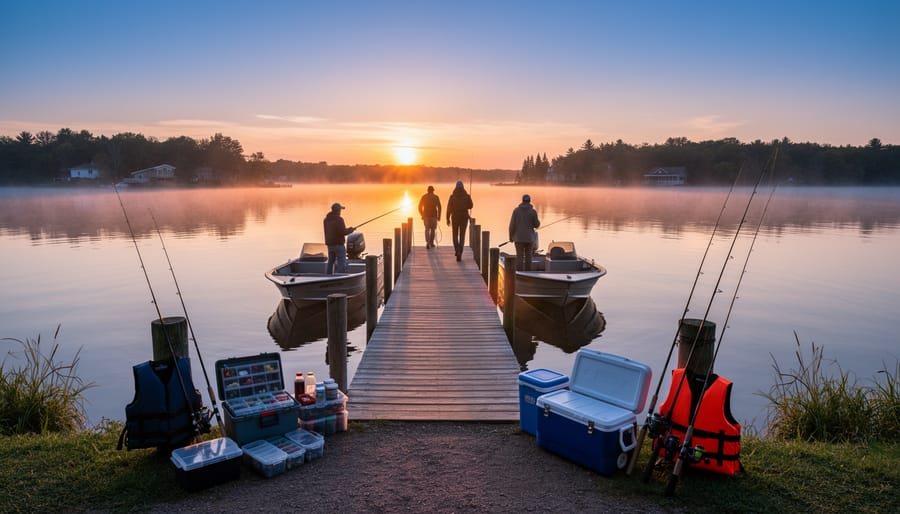
Lake Simcoe stretches across roughly 722 square kilometres of south-central Ontario, making it the fourth-largest lake entirely within the province. Its waters reach depths exceeding 40 metres in some spots, creating varied habitat that supports an impressive range of fish species. The lake has earned its reputation through decades of consistent fishing opportunities rather than fleeting hot streaks.
Anglers target lake trout, smallmouth bass, largemouth bass, yellow perch, and whitefish throughout the seasons. The lake whitefish fishery draws particular attention during winter months, while bass fishing peaks in summer when warmer surface temperatures push fish into shallow bays and rocky shorelines. Lake trout hold in deeper, cooler water year-round, offering opportunities even during the heat of July and August when many Ontario lakes slow down.
The lake’s fish community reflects healthy ecosystem management and natural productivity. Cold-water species thrive in the deeper basins while warm-water fish flourish along the extensive shoreline and in protected bays. This diversity means anglers can adjust their approach based on skill level, preferred techniques, and target species without leaving the lake.
Ice fishing culture runs deep here. Come January, permanent huts dot the frozen surface as anglers pursue perch and whitefish through holes drilled into thick ice. The lake’s size provides enough space that even busy weekends don’t feel crowded once you move beyond the main access points.
What sets Lake Simcoe apart isn’t a single trophy fishery but rather the reliability of finding action across multiple species. It’s a working angler’s lake where preparation and knowledge of seasonal patterns produce results more consistently than luck alone.
Water Quality and Safe Swimming Conditions
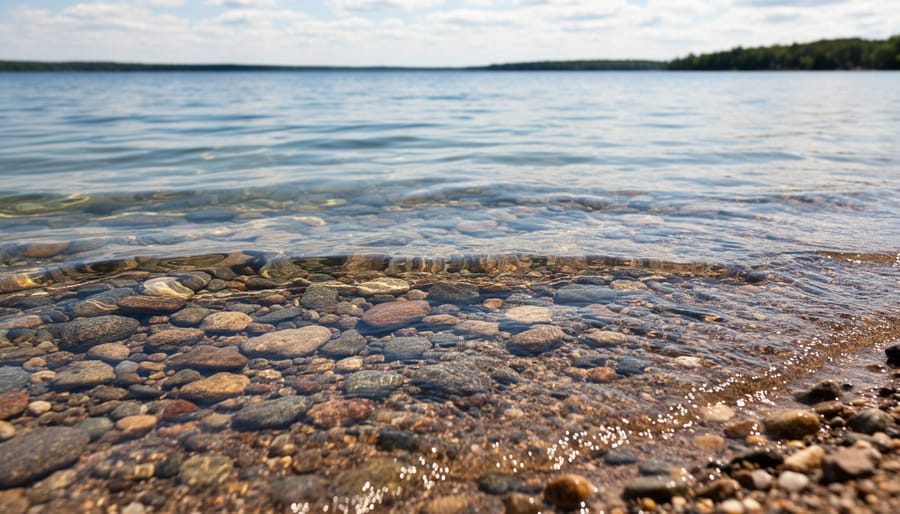
York Region runs a comprehensive Summer Beach Water Testing Program at Lake Simcoe’s public beaches from mid-June through the end of August each year. The program ensures that families combining fishing trips with beach time can do so with confidence in the water quality conditions.
The monitoring protocol is straightforward but thorough. Trained samplers collect a minimum of five water samples from each designated public beach, typically twice weekly throughout the summer season. These samples undergo laboratory testing specifically for E. coli bacteria, the standard indicator organism used to assess recreational water safety across Ontario and most of North America.
The twice-weekly sampling schedule provides a reliable snapshot of current conditions while accounting for the fact that water quality can shift with weather patterns, water temperature, and other environmental factors. E. coli levels fluctuate naturally in lake environments, so the regular testing rhythm helps identify any concerning trends before they become health risks.
For anglers planning multi-day trips with family in tow, this testing program offers real peace of mind. You can fish the productive waters in the morning, then let the kids swim and play at a monitored beach in the afternoon heat, knowing the water has been recently tested and cleared for recreational use. The program specifically targets the peak season when both fishing activity and beach use overlap, running through the warmest months when families are most likely to combine angling with swimming.
The testing focuses on designated public beaches around the lake, so it pays to research which specific locations fall under the monitoring program when planning your base of operations. Not every shoreline access point receives the same level of oversight, making the designated beaches the safer choice for family activities.
Planning Your Lake Simcoe Fishing Adventure
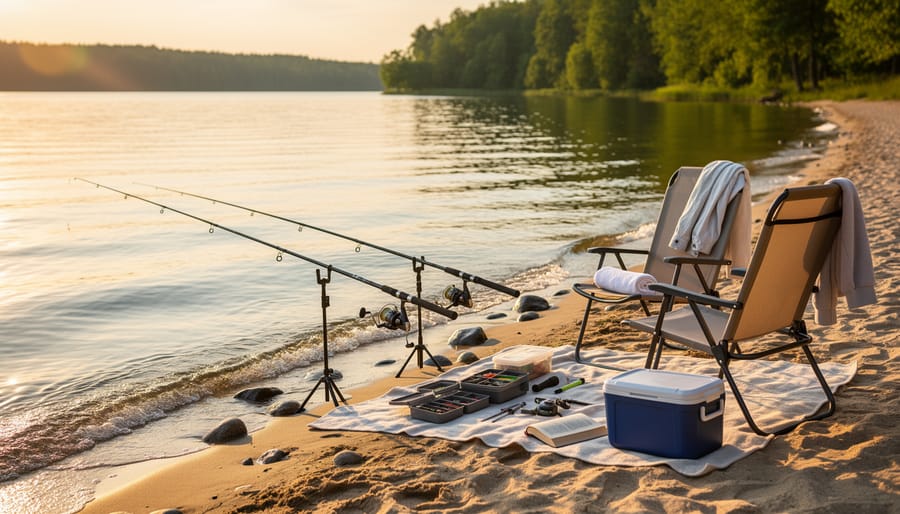
A successful Lake Simcoe fishing trip starts with understanding the lake’s regulations and seasonal patterns. Ontario’s fishing regulations vary by zone and species, so check the current bass season dates and other species-specific restrictions before you pack your tackle box. Lake Simcoe’s regulations reflect its status as a managed fishery, with rules designed to protect spawning populations while maintaining excellent angling opportunities.
Timing matters. Summer brings warm-water action for bass and pike, while late spring and fall offer prime conditions for pursuing trout species. Winter transforms the lake into an ice fishing destination, and if you’re planning a cold-weather trip, our ice fishing rods guide covers what to look for in gear suited to Ontario conditions. Each season demands different preparation and tackle approaches.
Research launching access and facilities before departure. Public boat launches serve various areas around the lake, but amenities and parking capacity differ. Some locations get crowded during peak periods, so having alternate access points mapped out prevents wasted morning hours. If you’re assembling tackle for the trip, shop local for gear and support Ontario businesses while getting advice from experienced staff.
Consider lodging and provisions as part of your planning. Lake Simcoe offers everything from basic campgrounds to full-service resorts, and your choice depends on trip length and comfort preferences. Stock up on essentials before arriving, though towns around the lake provide groceries and fishing supplies for anything forgotten.
The lake’s size means you’ll want local knowledge or willingness to explore. Study depth maps, identify structure, and note seasonal fish movement patterns. Talking with local anglers or guides can shortcut the learning curve considerably.
Dining and Provisions Around the Lake
Lake Simcoe’s shoreline communities have developed a food scene that caters to anglers and visitors spending long days on the water. You’ll find the full spectrum of dining options circling the lake, from quick-service spots serving classic fish and chips to family restaurants where you can sit down after a morning on the water. Many establishments understand the angler’s schedule, opening early enough to catch fishermen before dawn launches and staying open late for those who push their luck until sunset.
The lakeside towns also support anglers who prefer cooking their own catch. Local grocery stores stock the essentials for shore lunches, and you’ll typically find bait shops that double as convenience stores near the main launch points. Some marina areas feature small cafes where you can grab coffee and sandwiches to pack along, saving the sit-down meal for after you’ve cleaned your fish and secured your gear.
For anglers planning multi-day trips, the surrounding communities offer enough variety to avoid restaurant fatigue. You can move between casual waterfront patios, roadside diners serving hearty breakfast plates, and places specializing in fresh local fish preparations. The best places to eat in any fishing destination are usually those that respect an angler’s timeline, don’t rush you out the door, and understand that sometimes you need a table for wet gear as much as hungry people.
If you’re someone who likes combining serious fishing with culinary exploration, Lake Simcoe’s restaurant scene rewards that approach without demanding it.
The Road Trip from Northwestern Ontario
The journey to Lake Simcoe from northwestern Ontario represents a genuine expedition, and that’s precisely what draws certain anglers to make the trip. This isn’t a quick weekend getaway. It’s the kind of adventure that requires committed time off work, thorough vehicle preparation, and the acceptance that you’re crossing multiple regions of Ontario to chase a different fishing experience than what your home waters offer.
The mindset matters as much as the mileage. Anglers who make cross-province trips do so because they understand that Ontario’s diverse waters each offer something unique. Where northwestern lakes provide wilderness solitude and certain species, Lake Simcoe delivers a completely different angling environment with its own character and challenges. Treat it as exploration rather than routine fishing, and you’ll appreciate what makes the destination distinct.
Preparation extends beyond tackle. Map your route with fuel stops in mind, since long stretches of highway separate northwestern communities from southern Ontario’s denser towns. Pack provisions for the drive itself. Download offline maps. Check your spare tire and emergency kit. Consider the return journey when you’re tired after days on the water. Factor in accommodation costs for multiple nights, because rushing the drive defeats the purpose of experiencing a new fishery properly.
For anglers whose lives revolve around testing themselves against varied waters, Ontario’s size becomes an invitation rather than an obstacle.
Lake Simcoe represents just one chapter in Ontario’s rich angling story, a testament to the province’s remarkable diversity of fishing waters. From the shield lakes of the north to the great waters of the south, each destination offers its own character and challenge. The spirit that draws anglers to explore new waters, whether an hour from home or half a day’s drive away, connects fishing communities across Ontario. Before making the trip, verify current fishing regulations, licensing requirements, and any specific lake conditions through official provincial resources. Lake Simcoe’s established reputation makes it worth considering for anglers building their list of Ontario destinations to experience. The province’s waters continue to offer exploration opportunities for those willing to venture beyond familiar shores.