
Deep in the Canadian wilderness, where moose outnumber people and the northern lights paint the winter sky, Atikokan built something unexpected: a thriving martial arts community that has shaped generations of residents since the 1970s. What began with a handful of dedicated instructors teaching discipline and self-defense in church basements and school gyms grew into lasting traditions that now define how this town of 2,600 forges character in its young people.
The connection between martial arts and Atikokan might seem surprising at first glance. This is a place known for its fishing camps, mining heritage, and gateway access to Quetico Provincial Park. But look closer and the fit makes perfect sense. The same values that drew settlers to carve out a life in this rugged landscape, values perhaps traced back to Atikokan’s Viking heritage found new expression in the dojo. Perseverance. Respect. Mental toughness. The willingness to show up in February darkness, week after week, to master a skill that demands patience.
Local schools like Atikokan Taekwon-Do and the various karate programs that have operated over the decades became more than just places to learn kicks and forms. They became gathering points where families connected, where shy kids found confidence, and where instructors volunteered countless hours because they believed in building something stronger than themselves. These weren’t commercial ventures chasing profit. They were labours of love that left permanent marks on the community.
When Martial Arts First Came to Atikokan
The story of martial arts in Atikokan doesn’t begin with a grand tournament or a famous master. It starts quietly in the late 1970s, when a handful of residents who’d trained elsewhere brought their knowledge home to this wilderness town. Back then, finding a place to practice meant borrowing space in the community center basement or clearing a corner of the old recreation hall after hockey practice wrapped up.
The earliest disciplines to take hold were judo and karate. A few miners and forestry workers who’d learned the basics during travels or military service began teaching small groups of kids after work. These weren’t certified black belts opening polished studios, they were neighbors sharing skills, adapting what they knew to fit the resources available. Practice mats were often wrestling mats borrowed from the school, and students trained in whatever athletic gear they owned.
By the early 1980s, interest had grown enough that the town supported more structured classes. An instructor from Thunder Bay started making the drive to Atikokan twice a week, teaching traditional Shotokan karate in the community center. Students ranged from grade-schoolers to adults in their forties, all lining up together to learn stances and strikes in a space that smelled of chlorine from the adjacent pool.
We never imagined martial arts would stick in a place like this, but the same people who could navigate thirty miles of portages turned out to have the patience and grit for training.
What made these early years remarkable wasn’t technical excellence or competitive success. It was the way a remote northern community, isolated by distance and defined by its relationship with the land, embraced traditions from halfway around the world. The discipline required to earn a belt mirrored the discipline needed to survive a harsh winter or complete a long canoe route. Eastern philosophy found common ground with northern resilience, and martial arts became part of Atikokan’s identity.
The Dojos and Schools That Shaped Our Community
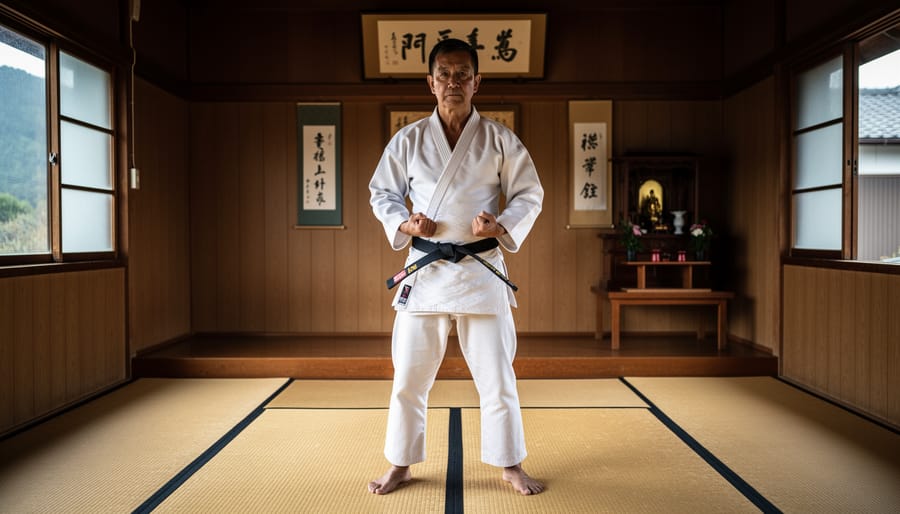
In a town where most buildings serve multiple purposes, Atikokan’s martial arts schools have always reflected the community’s resourcefulness and dedication. The journey began in the basement of the old community center on Main Street, where wooden floors creaked under bare feet and the smell of fresh paint mixed with decades of athletic sweat. This was where Sensei Robert Chen first taught karate in the late 1970s, transforming a storage room into what locals still remember as “the first real dojo.”
The Atikokan Recreation Center became the heart of martial arts training through the 1980s and 1990s. Thursday evenings belonged to taekwondo under Master Lynn Kowalski, who moved to town with her husband and opened classes that drew families from across the district. Her students ranged from six-year-olds learning basic kicks to adults seeking discipline after long shifts at the mill. The portable mats came out, mirrors were propped against walls, and for two hours each week, the multipurpose room transformed into a place of focused tradition.
By the early 2000s, the Henderson family converted their garage on Third Street into what residents affectionately called “Henderson’s Garage Dojo.” Bill Henderson, a second-degree black belt in judo, taught there for nearly fifteen years. The space was small and heated by a woodstove in winter, but it produced some of Atikokan’s most dedicated martial artists. His daughter Sarah eventually took over instruction, blending judo with Brazilian jiu-jitsu techniques she learned during college in Thunder Bay.
The connection between martial arts discipline and outdoor wisdom ran deep in these spaces. Instructors often drew parallels between patience on the mat and patience on the water, comparing the mental focus required in sparring to the awareness needed on forest trail teachings passed down through generations.
Today, classes rotate through the current recreation complex, with instructors like Marcus DeLong teaching mixed martial arts fundamentals. These spaces may lack the ornate shrines of urban dojos, but they hold something more valuable: the accumulated spirit of families who chose to keep these traditions alive in a place where wilderness and discipline walk side by side.
Stories from the Mat: Local Champions and Their Journeys
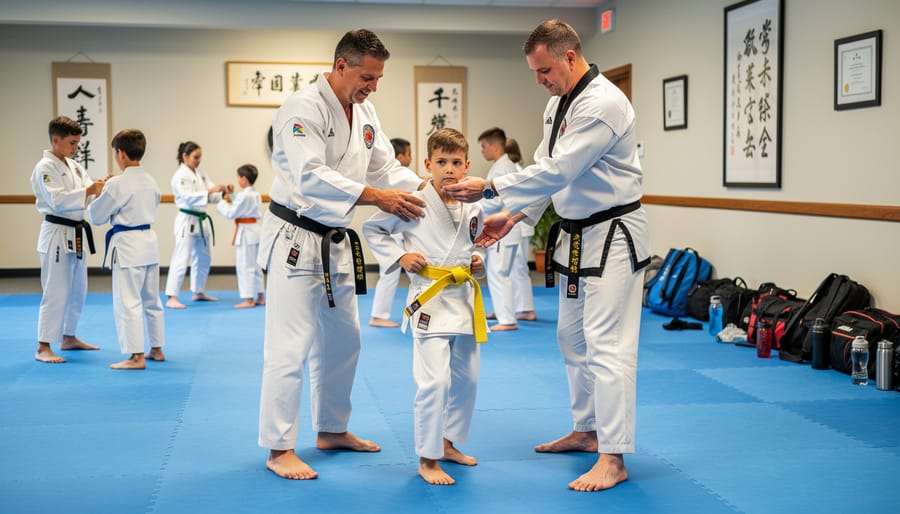
When Sarah Chen earned her black belt in taekwondo at age fourteen, the entire town showed up to watch. The demonstration took place in the same community hall where she’d started training seven years earlier, stumbling through basic kicks with a group of equally awkward eight-year-olds. Her parents had signed her up hoping it might help with focus and confidence. What they got was a daughter who would go on to compete at provincial championships, but more importantly, a young woman who learned that progress comes from showing up even when the February cold makes you want to stay in bed.
Sarah’s journey mirrors dozens of others in Atikokan, where martial arts became less about producing fighters and more about building character. Tom Kowalski still talks about the summer he spent practicing kata in his backyard, determined to perfect a form before the fall tournament in Thunder Bay. He didn’t win that day, but he learned something about persistence that served him well years later when he took over his family’s logging operation. The same focus he’d applied to perfecting a sequence of movements helped him navigate the challenges of running a business in a small town.
These stories reflect a deeper truth about community resilience. The same qualities that helped early settlers thrive in this remote corner of Ontario, discipline, respect, mental toughness, found new expression on the training mats. Parents watched their kids learn to bow before sparring, to help younger students with techniques, to push through frustration when a new skill wouldn’t click.
Not every student competed beyond the local level, and that was never the point. Michael Desrochers trained in karate for three years before hockey consumed his teenage life, but he credits those years with teaching him how to handle pressure. Lisa Fontaine used her judo training as a foundation for outdoor leadership programs. The belts and trophies mattered less than the quiet confidence these residents carried forward, the understanding that growth happens incrementally, one technique and one day at a time.
More Than Fighting: What Martial Arts Taught Our Town
The physical techniques were just the surface. Over the decades, martial arts wove something deeper into Atikokan’s character, a set of values that resonated with people who already knew what it meant to face a harsh winter or navigate sixty kilometres of wilderness trail.
Discipline became second nature. Students who showed up twice a week to practice forms weren’t just learning kicks and blocks. They were developing the same consistency required to maintain a trapline or keep a small business alive through lean seasons. Parents noticed kids finishing homework without being asked, completing chores without complaint. The structure of belt progression, earned through demonstrated skill, not simply attendance, mirrored the honest accountability northern communities depend on.
Respect flowed through every bow, every time students addressed their instructor as sensei or sabumnim. That formality might seem out of place in a town where everyone knows everyone, but it taught something essential: honouring expertise and experience regardless of setting. It’s the same respect shown to elders who know where the best fishing spots are, the courtesy extended when someone shares hard-won knowledge about surviving forty-below temperatures.
Mental toughness proved equally valuable. Sparring taught students to stay calm when pressured, to think clearly when tired or hurt. Those lessons transferred directly to life in a remote community where the nearest hospital sits an hour away and problems can’t always wait for help to arrive. The resilience martial arts cultivated paralleled other traditions, including the Lakota traditions that shaped the region’s Indigenous communities, which also emphasized inner strength and perseverance through hardship.
Perhaps most importantly, the dojos became gathering places. Training partners became friends. Parents connecting in the waiting area built networks that extended beyond the mat, creating the tight community bonds that help small towns thrive when isolation and distance might otherwise divide them.
Keeping the Tradition Alive in 2026
Today, martial arts in Atikokan remains woven into the town’s character, though the landscape has shifted from the dedicated dojos of decades past. Classes now meet in multi-purpose spaces at the Community Centre and the high school gym, where instructors offer karate and taekwondo sessions twice weekly for kids and adults. These programs adapt to northern realities, winter schedules adjust around hockey seasons, summer classes pause when families head to the lakes, and instructors often double as coaches, teachers, or business owners who volunteer their evenings because they believe in what martial arts gave them.
The current generation of students trains in the same spaces where their parents learned to tie their first belts. Some families now span three generations of martial artists, with grandparents watching their grandchildren perform kata at the annual spring demonstration. Instructors incorporate what they know students face outside the training hall: the mental toughness needed for long, dark winters; the self-reliance required when the nearest city is hours away; the community bonds that matter when everyone knows your name.
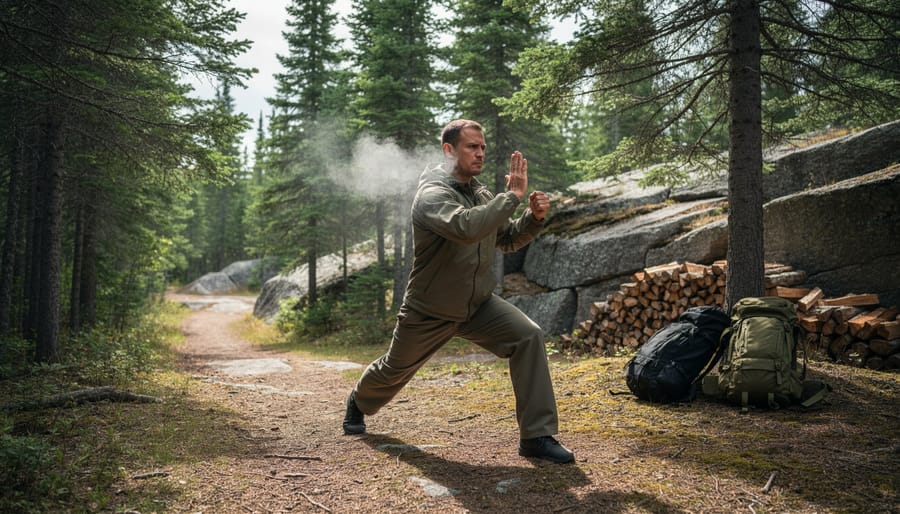
What persists isn’t a single school or style, but the understanding that martial arts fit naturally alongside Atikokan’s other traditions. Kids who paddle the Turtle River in July practice their forms in January. The discipline that helps you portage a canoe serves you well when you’re holding a difficult stance. Both pursuits teach you to push through discomfort, respect the path others walk, and find strength you didn’t know you had. That’s why martial arts haven’t faded here, they answer the same call that brought them north fifty years ago.